10 Best Aluminum Door Manufacturers in 2026?

Time:2026-09-30 Author:Henry
0%

Choosing among the 10 Best Aluminum Door Manufacturers in 2026 requires more than comparing glossy catalogs. A reliable Aluminum Door must perform under daily pressure, changing weather, and repeated use. Its frame should resist corrosion, while thermal breaks can reduce heat transfer through the metal. Hardware quality matters too. A loose hinge or weak seal can quickly damage a beautiful entrance.

This guide examines manufacturers through practical criteria, including material quality, tested air and water resistance, thermal performance, finish durability, customization, warranty coverage, and installation support. Coastal projects deserve special attention because salt air can expose weak coatings within months. We also consider real project details, such as narrow sightlines, oversized panels, threshold drainage, and accessible entry requirements. Product claims still require careful verification.

Building-science expert Joseph Lstiburek often states, “Water is the enemy.” That short warning applies directly to every exterior Aluminum Door. A strong frame cannot compensate for poor flashing or careless installation. This ranking therefore considers both factory performance and field reliability.

No ranking is flawless. Manufacturer data may differ by region, testing method, and product series. Some brands offer excellent thermal systems but limited service networks. Others provide attractive prices but fewer verified performance records. Readers should request current test reports, sample finishes, warranty terms, and installer references before choosing. The best manufacturer is not always the most famous. It is the one that matches the building’s climate, design goals, budget, and long-term maintenance needs.
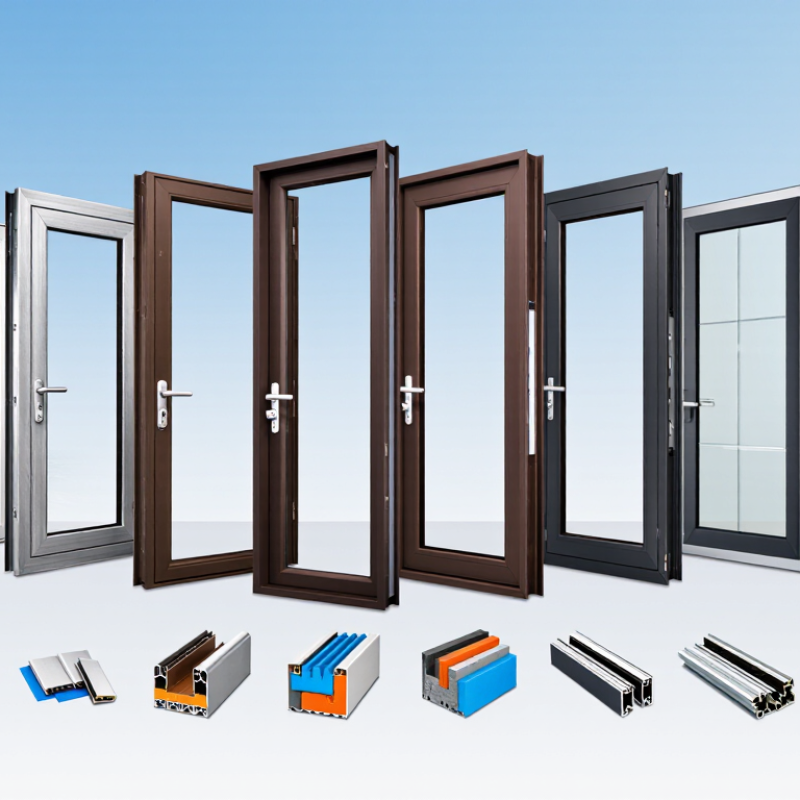
10 Best Aluminum Door Manufacturers in 2026?

What Defines a Leading Aluminum Door Manufacturer in 2026

A leading aluminum door manufacturer in 2026 offers more than attractive frames and polished catalog images. It understands how doors perform after years of daily use. Experienced teams study coastal salt, intense sunlight, heavy rain, and frequent temperature changes before choosing materials. They also test hinges, locks, seals, and rollers under repeated cycles.

Technical knowledge appears in small details. Reliable manufacturers explain alloy selection, thermal breaks, drainage paths, and glass compatibility in clear language. They provide measured air, water, and wind performance data instead of vague claims. Factory quality control should include frame squareness checks, coating inspections, and batch traceability. Small defects matter. A poorly aligned corner can cause drafts, noise, or difficult closing.

Strong manufacturers also support architects, contractors, and homeowners after delivery. Their drawings show installation gaps, fixing points, and sill details. Their teams answer practical questions quickly. A useful warranty identifies coverage, maintenance duties, and response times without confusing wording. Independent testing and recognized certifications add authority, but paperwork alone proves little.

No factory gets every detail right. The better ones admit production limits and explain corrective steps. That honesty builds trust. Visitors should look for clean assembly areas, protected finished surfaces, and workers who can explain their process. A dependable supplier discusses repairs, replacement parts, and long-term maintenance before accepting an order. The best choice is not always the cheapest door. It is the manufacturer that combines measurable performance, consistent craftsmanship, and responsible communication.

Key Standards for Comparing Aluminum Door Manufacturers

The 10 Best Aluminum Door Manufacturers in 2026 should be compared through measurable standards, not attractive catalogs. Check thermal performance, air leakage, water resistance, and structural test results. Ask for documented U-values and test conditions. Figures without test methods can mislead buyers.

Material quality also matters. Confirm the aluminum alloy, wall thickness, corrosion protection, and coating process. Reliable manufacturers provide traceability for profiles, glass, hardware, and finished doors. Independent laboratory reports add credibility. I have seen impressive samples fail during installation because drainage details were ignored. That weakness deserves attention.

Tips: Request a complete technical file before ordering. Compare warranty terms, replacement support, lead times, and installation guidance. Examine a working sample, not only photographs. Test hinges, locks, seals, and closing pressure by hand. A low quotation may hide thinner profiles or limited after-sales service. Review the details twice.

10 Best Aluminum Door Manufacturers in 2026? - Key Standards for Comparing Aluminum Door Manufacturers

A practical, standards-based comparison framework for evaluating aluminum door manufacturers without relying on brand names.

No. Comparison Dimension Recommended Performance Standard What to Verify from the Manufacturer Relevant Test Method or Reference
1 Aluminum Alloy and Temper Use a documented architectural aluminum alloy and temper, commonly an alloy from the 6000 series selected for extrusion, strength, and corrosion resistance. Request the alloy designation, temper, mill certificate, and material traceability for frames, sashes, and major structural profiles. Material certificates should identify chemical composition and mechanical properties according to the applicable national or international aluminum standard.
2 Profile Wall Thickness Specify wall thickness according to door size, loading, and use; heavier-duty entrances generally require thicker or reinforced profiles than interior applications. Check approved profile drawings, measured wall thickness, reinforcement details, and allowable door dimensions rather than accepting a generic “heavy-duty” claim. Verification should follow the project specification and applicable building-code requirements for structural resistance and deflection.
3 Surface Finish and Coating Require a controlled anodized or powder-coated finish with documented film thickness, color consistency, adhesion, and weathering performance. Review coating-system details, surface-preparation procedures, batch records, color tolerances, and warranty terms for fading, chalking, and corrosion. Common references include AAMA 2603, AAMA 2604, and AAMA 2605 for organic coatings, depending on the required durability level.
4 Air Infiltration Select a tested air-leakage class suitable for the building type and climate; lower measured leakage indicates better sealing performance. Request a laboratory test report showing the complete door assembly, test size, pressure difference, leakage result, and test date. Air infiltration is commonly evaluated using ASTM E283 or EN 1026, with classification commonly reported under EN 12207.
5 Water Penetration Resistance Require a water-resistance rating appropriate for the exposure zone, especially for exterior doors exposed to wind-driven rain. Verify the tested pressure, duration, drainage design, sill configuration, corner joints, and whether the test used the same hardware and glazing system. Typical references include ASTM E547, ASTM E331, or EN 1027, with classification commonly reported under EN 12208.
6 Wind Load and Structural Performance The complete door assembly should meet the project’s design wind pressure without unacceptable permanent deformation or operating failure. Ask for structural calculations or test results covering frame dimensions, glass weight, hardware, anchorage, positive pressure, and negative pressure. Relevant methods may include ASTM E330/E330M or EN 12211, interpreted against the project’s local wind-load code.
7 Thermal Performance Use thermally broken frames for conditioned spaces when reducing heat transfer and condensation risk is important. Compare whole-door U-value or U-factor, not only the frame value; confirm the glass specification, spacer, frame geometry, and calculation boundary. Thermal performance may be calculated or tested under ISO 10077, ISO 12567, NFRC procedures, or the applicable local energy code.
8 Hardware and Cycle Durability Hardware should be corrosion-resistant and rated for the expected opening frequency, traffic level, door weight, and security requirements. Verify hinge, lock, closer, roller, handle, and panic-hardware specifications, replacement availability, adjustment procedures, and cycle-test results. Durability may be assessed using EN 1191 for door operating cycles and EN 12400 for durability classification, where applicable.
9 Glazing and Safety Compliance Use glazing and retention systems suitable for the door location, with safety glazing where human-impact risk exists. Confirm glass type, thickness, edge support, setting blocks, gaskets, drainage, safety markings, and compatibility between glass and frame system. Common references include ANSI Z97.1 and CPSC 16 CFR 1201 for safety glazing, together with the applicable building code.
10 Quality Control, Documentation, and Warranty Choose a manufacturer with documented production controls and traceable final inspection for dimensions, finish, hardware, glazing, and packaging. Request inspection plans, approved shop drawings, sample approvals, nonconformance procedures, installation instructions, spare-parts policy, and written warranty coverage. Quality systems may be supported by ISO 9001 certification, while product warranties should clearly state exclusions, service conditions, and claim procedures.

Evaluation note: The best manufacturer is the one whose tested door system matches the project’s climate, building code, dimensions, security needs, traffic level, installation method, and lifecycle requirements.

Ten Notable Aluminum Door Manufacturers to Consider in 2026

Ten Notable Aluminum Door Manufacturers to Consider in 2026

Choosing among ten notable aluminum door manufacturers requires more than comparing online photographs. A reliable supplier should provide alloy specifications, thermal-performance data, warranty terms, and installation guidance. Look for manufacturers with documented factory testing and consistent quality-control procedures. Their doors should resist corrosion, air leakage, water penetration, and repeated opening cycles.

Project experience matters. Manufacturers serving coastal homes may use stronger protective coatings and corrosion-resistant hardware. Commercial specialists often focus on heavier frames, fire-rated assemblies, acoustic control, and high-traffic durability.

Ask for recent project references, not only polished showroom images. A narrow profile can look elegant, yet it may perform poorly when glazing, drainage, and local weather conditions are ignored.

Review ten candidates through the same checklist. Compare frame depth, glass options, lead times, replacement-part access, and installer training. Request written performance figures. Vague promises deserve caution. Some manufacturers offer impressive customization but struggle with delivery consistency. Others provide dependable systems with fewer colors or hardware choices. That trade-off is easy to miss.

No ranking is perfect. Regional availability changes quickly. Even excellent doors can disappoint after poor measurement or careless installation. Before ordering, inspect a sample corner, test the locking action, and confirm how water drains from the sill. Small details often decide long-term performance.

Product Range, Customization, and Performance Comparison

Choosing among the 10 best aluminum door manufacturers in 2026 requires more than comparing catalog photographs. Product range matters because homes, offices, hotels, and coastal buildings need different door systems. Leading manufacturers usually offer sliding, folding, hinged, pivot, thermal-break, and fire-rated options.

Customization separates capable suppliers from ordinary fabricators. Check available frame depths, glass thicknesses, hardware finishes, thresholds, screens, and accessibility features. Some suppliers can match unusual openings within millimeter tolerances. Others offer only standard sizes. Request corner samples and full-size mock-ups before approving production. Small details matter.

Performance comparison should include air leakage, water resistance, wind-load capacity, thermal transmittance, acoustic control, and cycle testing. Ask for current test reports, installation requirements, and warranty conditions. A door may look slim but perform poorly if its seals compress unevenly. Coastal projects also need suitable coatings and corrosion-resistant hardware. Installation quality remains critical.

The best ranking is rarely permanent. A manufacturer may excel in thermal efficiency but struggle with delivery times. Another may provide excellent customization yet limited technical support. That weakness deserves attention. Prices can also mislead when glazing, hardware, shipping, and site adjustments are excluded. Compare complete specifications, not attractive base quotes. Test the handle, inspect the gasket, and check drainage paths before signing.

How to Choose the Right Aluminum Door Manufacturer for Your Project

How to Choose the Right Aluminum Door Manufacturer for Your Project

Choosing an aluminum door manufacturer starts with project evidence, not attractive brochures. Ask for tested U-values, air leakage, water penetration, and wind-load results. These figures should match your climate and building height. ISO 10077 explains how thermal transmittance is assessed, while AAMA/WDMA/CSA 101/I.S.2/A440 covers performance testing for fenestration products. Confirm which standards apply to your location. A certificate without a matching product specification is weak evidence.

Energy performance deserves attention. The UNEP 2023 Global Status Report states that buildings consume about 30% of global final energy and create roughly 37% of energy-related emissions. A poorly detailed entrance can undermine an efficient façade. Examine thermal breaks, gaskets, drainage paths, and threshold design. Request project references with similar traffic, exposure, and door sizes. Visit a completed site if possible. Samples can mislead.

Check factory quality controls, coating records, hardware compatibility, replacement-part availability, and installation training. Ask how the manufacturer handles warped frames, damaged finishes, and delayed components. Get these answers in writing. The International Aluminium Institute reports that recycled aluminium requires around 5% of the energy used for primary production, so request verified recycled-content or environmental product data. Do not select on recycled content alone. Service capacity matters more after installation. I have seen elegant specifications fail because local installers lacked adjustment skills. That risk is easy to overlook.

FAQS

What makes an aluminum door manufacturer reliable in 2026?

A reliable manufacturer studies long-term use, not only attractive catalog images. It tests hinges, locks, seals, and rollers repeatedly. Factory checks should include frame alignment, coating quality, and batch traceability. No supplier is perfect. Honest teams explain limits and corrective actions.

Which performance data should buyers request?

Ask for tested air leakage, water resistance, wind capacity, thermal transmittance, and acoustic performance. Request documented U-values and test conditions. Figures without testing methods can mislead. Look for independent laboratory reports where possible. Details decide.

How can buyers check aluminum material quality?

Confirm the alloy, wall thickness, corrosion protection, and coating process. Ask for traceability covering profiles, glass, hardware, and finished doors. Coastal buildings need suitable coatings and corrosion-resistant hardware. A polished sample proves little.

What door styles should a capable manufacturer offer?

Useful ranges may include sliding, folding, hinged, pivot, thermal-break, and fire-rated systems. Different buildings require different solutions. Check frame depths, glass thicknesses, thresholds, screens, and accessibility features. Standard sizes may not suit unusual openings.

Why are installation details important?

Correct installation protects drainage, sealing, alignment, and structural performance. Technical drawings should show fixing points, installation gaps, and sill details. Inspect drainage paths before signing. Poor installation can create drafts, noise, or difficult closing.

How should buyers compare customization options?

Request corner samples and full-size mock-ups before production. Check handle positions, gasket compression, hardware finishes, and glass compatibility. Some suppliers achieve millimeter-level accuracy. Others offer limited standard sizes. That difference matters.

What should a warranty and support service include?

A useful warranty clearly explains coverage, maintenance duties, and response times. Ask about replacement parts, repairs, installation guidance, and lead times. Support should continue after delivery. Vague promises deserve careful questioning.

Is the lowest quotation usually the best choice?

Not always. A low price may exclude glazing, hardware, shipping, or site adjustments. It may also hide thinner profiles or weaker after-sales support. Compare complete specifications, not base prices. Recheck every detail.

Conclusion

Choosing the right Aluminum Door manufacturer in 2026 requires more than comparing prices. Leading manufacturers are defined by consistent material quality, precise engineering, reliable production processes, strong safety performance, energy efficiency, and responsible environmental practices. Key comparison standards include aluminum alloy strength, coating durability, thermal insulation, weather resistance, hardware quality, certifications, warranty support, delivery reliability, and the ability to meet project-specific requirements.

This overview presents ten notable types of manufacturers to consider while comparing their product ranges, customization options, design flexibility, performance, and service capabilities. Some may specialize in residential entrances, while others focus on commercial buildings, high-traffic facilities, or large architectural projects. To make the best choice, buyers should evaluate the project’s climate, security needs, operating frequency, budget, installation conditions, and long-term maintenance expectations. A dependable manufacturer should provide clear technical specifications, responsive communication, accurate lead times, and practical support from design through installation.

Henry

Henry

Henry is a dedicated marketing professional with a profound expertise in the company's offerings. With years of experience in the industry, he possesses an impressive understanding of the market dynamics and consumer behaviors that drive success. Henry is committed to sharing his insights through......