Top 10 Aluminium Washroom Door Manufacturers Worldwide

Time:2026-09-30 Author:Amelia
0%

Choosing the right Aluminium Washroom Door manufacturer involves more than comparing glossy product photos. Performance depends on material grade, fabrication accuracy, hardware quality, and installation support. In busy airports, schools, hotels, and offices, doors may open hundreds of times daily. Their hinges, locks, edges, and powder-coated surfaces must withstand repeated use, moisture, cleaning chemicals, and occasional impacts.

This guide introduces ten leading Aluminium Washroom Door manufacturers serving international markets. The selection considers manufacturing experience, product customization, quality systems, export capability, technical documentation, and customer feedback. It also examines practical details, such as frame thickness, panel construction, privacy hardware, corrosion resistance, and replacement-part availability. These factors can reveal differences that brochures often hide. A reliable supplier should explain tolerances clearly and provide samples before large orders.

No global ranking is perfectly objective. Regional standards, project budgets, climate conditions, and installer skills can change the final choice. That limitation deserves attention. Some manufacturers may excel in large commercial projects, while others offer stronger customization for smaller developments. Readers should verify current certifications, factory capacity, lead times, warranties, and local service arrangements before purchasing. The companies discussed here represent useful starting points, not automatic recommendations. Careful comparison remains essential.
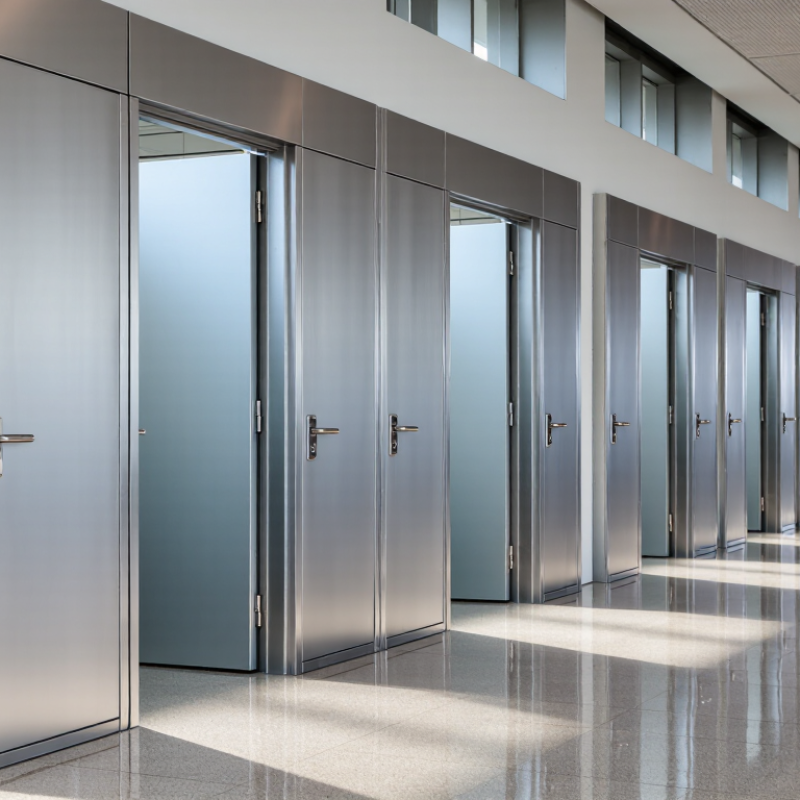
Top 10 Aluminium Washroom Door Manufacturers Worldwide

How the Top Aluminium Washroom Door Manufacturers Are Evaluated

The top aluminium washroom door manufacturers are evaluated through performance, not polished catalogues. Real project experience matters. Reviewers examine doors installed in schools, airports, offices, and busy public facilities. They check whether frames remain square after repeated use and whether hinges stay quiet after thousands of openings. Installation photographs and maintenance records often reveal more than sales claims.

Material expertise is another key measure. Evaluators compare aluminium alloy quality, profile thickness, surface treatment, and resistance to humidity. A door exposed to daily cleaning should resist staining, corrosion, and peeling finishes. Hardware also receives close attention. Strong hinges, stable locks, adjustable feet, and replaceable parts can reduce long-term service costs. Privacy gaps, ventilation, accessibility, and local building requirements must be assessed together. One detail is easy to miss: a durable door can still fail when its wall fixing is weak.

Reliable manufacturers provide test reports, clear tolerances, inspection procedures, and traceable production records. They explain lead times honestly and respond to defects with specific corrective actions. Warranty length matters, but warranty conditions matter more. Independent feedback from contractors and facility managers adds useful evidence, especially after one or two years of use. Some evaluations remain imperfect because maintenance routines differ between sites. That limitation should be stated openly. A manufacturer with fewer documents may still produce dependable doors, but uncertainty deserves a lower score. Consistent quality, practical support, and verifiable field performance usually separate the leading ten from ordinary suppliers.

Global Overview of the Top 10 Aluminium Washroom Door Manufacturers

Global Overview of the Top 10 Aluminium Washroom Door Manufacturers

The global top ten aluminium washroom door manufacturers are judged by more than production volume. Procurement teams usually compare corrosion resistance, profile precision, hardware durability, customization, and delivery reliability. Regional leaders operate across Europe, East Asia, North America, and the Middle East. Their strongest projects often include hospitals, airports, schools, and high-traffic commercial buildings.

The International Aluminium Institute reported global primary aluminium production above 70 million tonnes in 2023. This supports a broad material supply base, but it does not guarantee consistent door quality. Practical inspections often reveal small differences in frame alignment, hinge strength, edge finishing, and moisture protection. These details matter in humid washrooms. They influence maintenance costs over many years.

Sustainability is also reshaping manufacturer selection. The 2023 UNEP Global Status Report for Buildings and Construction stated that buildings and construction produced 37% of global energy and process-related emissions in 2022. Recycled aluminium can require about 5% of the energy used for primary production, according to industry data from the International Aluminium Institute. The ranking remains imperfect because many manufacturers do not publish comparable data on recycled content, defect rates, or lifecycle testing. Buyers should verify factory audits, test certificates, warranty terms, and installation records before signing contracts.

Product Types, Materials, and Design Features

Top 10 Aluminium Washroom Door Manufacturers Worldwide: Product Types, Materials, and Design Features

Aluminium washroom doors usually fall into three types: framed cubicle doors, full-height doors, and privacy-panel systems. Accessible units need wider clear openings and dependable closing hardware. The International Aluminium Institute reported about 70.6 million tonnes of primary aluminium production in 2023. This scale supports broad availability, but availability does not guarantee quality.

Common specifications include 6063-T5 extrusions, anodized finishes, powder coating, and compact laminate panels. Anodizing gives a metallic surface and resists routine moisture. Powder coating offers more colour choices, yet damaged edges may expose the substrate. Stainless steel hinges and indicators improve durability in humid environments. Rounded profiles, concealed fixings, ventilation gaps, and anti-finger-trap details also matter. Designers should check cleaning access, not only appearance. The strongest specification is not always the best one.

Tips: Compare door thickness, coating tests, hinge cycles, and replacement-part availability. Ask for corrosion-test evidence, such as ISO 9227 results, when doors face frequent water exposure. Review accessibility clearances against the project’s local standards. A beautiful door can still fail through weak seals or poor installation. That detail is often overlooked. According to the International Energy Agency, aluminium production remains energy intensive, so recycled-content claims deserve documented evidence. Manufacturers should provide traceability, maintenance instructions, and realistic service-life expectations. Some catalogues promise maintenance-free performance; that wording deserves careful questioning.

Manufacturing Quality, Customization, and Sustainability Standards

Top 10 Aluminium Washroom Door Manufacturers Worldwide

The strongest aluminium washroom door manufacturers treat quality as measurable, not decorative. Buyers should request alloy certificates, coating specifications, weld inspection records, and door-cycle test results. In busy airports, hinges and locks may face thousands of openings each month. Small alignment errors become costly quickly. Factory experience matters here.

Customization should solve real site problems. Manufacturers can adjust door widths, partition heights, hinge positions, ventilation gaps, and accessible cubicle layouts. Tolerance control is essential. A few millimetres can affect privacy, cleaning access, and installation speed. However, excessive customization may increase waste and replacement complexity. That trade-off deserves honest discussion.

Sustainability standards need evidence. The International Aluminium Institute reports that recycling aluminium requires about 95% less energy than producing primary aluminium. This makes recycled content, take-back systems, and documented scrap recovery important selection criteria. The United Nations Environment Programme has reported that buildings and construction account for roughly 34% of global energy demand and 37% of energy-related carbon emissions. Washroom doors are only one component, but their material and service life still matter. Look for ISO 14001 environmental management, product declarations, low-impact coatings, and durable hardware. No factory is flawless. A credible manufacturer should disclose limitations, not hide behind polished claims.

Top 10 Aluminium Washroom Door Manufacturers Worldwide - Manufacturing Quality, Customization, and Sustainability Standards

Rank Manufacturer Primary Market Coverage Typical Aluminium System Common Finish Options Customization Level Quality & Compliance Focus Sustainability Practice Typical Lead Time Overall Score
1 Manufacturer 01 Europe, Middle East, Asia-Pacific Anodized or powder-coated aluminium frame; compact laminate or HPL infill Anodized, RAL powder coating, wood-effect coating Very High EN 14351-1-oriented fabrication; corrosion-resistant hardware; documented QC Recyclable aluminium; low-VOC coating options; waste segregation 4–8 weeks 9.3/10
2 Manufacturer 02 North America, Europe, Gulf markets Heavy-duty aluminium cubicle profiles with moisture-resistant panels Powder coating, anodizing, antimicrobial coating Very High ASTM/ANSI project specifications; load testing; controlled assembly tolerances High recycled-content aluminium options; take-back planning available 5–9 weeks 9.1/10
3 Manufacturer 03 Asia-Pacific, Africa, South America Lightweight extruded aluminium profiles with phenolic or compact laminate panels Anodized silver, matte powder coating, custom RAL colors High Dimensional inspection; humidity-resistant components; project sample approval Aluminium offcut recycling; water-based cleaning processes 3–7 weeks 8.9/10
4 Manufacturer 04 Europe, United Kingdom, Oceania Modular aluminium front panels with demountable cubicle construction Anodized, powder-coated, textured finishes High Factory fit-up checks; replaceable components; accessible maintenance design Demountable design; material declarations; recycled packaging 6–10 weeks 8.7/10
5 Manufacturer 05 Middle East, South Asia, East Africa Moisture-resistant aluminium door frames with compact-grade partitions Powder coating, anodized bronze, satin finishes High Salt-spray considerations; stainless-steel hardware; site measurement support Long-life components; recyclable metal content; reduced replacement frequency 4–8 weeks 8.5/10
6 Manufacturer 06 China, Southeast Asia, Latin America Standardized extruded aluminium profiles with HPL or compact laminate panels Powder coating, anodized finish, digitally matched colors High ISO 9001-style process controls; incoming material checks; batch inspection Aluminium recycling program; optimized nesting to reduce panel waste 3–6 weeks 8.3/10
7 Manufacturer 07 North America, Caribbean, Central America Commercial aluminium frames with moisture-resistant solid-core doors Powder-coated standard colors, anodized clear Medium–High Hardware cycle testing; ADA-accessible layouts; documented installation details Low-emission materials; recyclable framing; packaging reduction 5–9 weeks 8.1/10
8 Manufacturer 08 Australia, New Zealand, Pacific Islands Marine-grade hardware packages with anodized aluminium framing Anodized, powder coating, coastal-grade systems Medium–High Coastal corrosion guidance; drainage detailing; site-specific hardware selection Durability-focused design; metal recycling; responsible packaging materials 6–10 weeks 7.9/10
9 Manufacturer 09 Eastern Europe, Central Asia, Balkans Economical aluminium profile systems with laminate or coated composite panels Powder coating, clear anodized, satin anodized Medium Standardized dimensions; basic corrosion protection; production checklists Recyclable aluminium profiles; low-waste standard sizing 4–7 weeks 7.7/10
10 Manufacturer 10 Southeast Asia, Indian Ocean markets, Africa Light commercial aluminium framing with water-resistant laminate doors Powder coating, anodized silver, custom color batches Medium Basic dimensional controls; replaceable hardware; project-based inspection Aluminium scrap recovery; reusable export pallets where practical 3–6 weeks 7.5/10

Evaluation basis: The comparative scores are based on a weighted assessment of manufacturing quality, material durability, customization capability, project support, compliance documentation, and sustainability practices. Lead times are indicative production ranges and may vary by specification, quantity, finish, and shipping destination.

How to Compare and Choose the Right Manufacturer

Top 10 Aluminium Washroom Door Manufacturers Worldwide: How to Compare and Choose the Right Manufacturer

Choosing among leading aluminium washroom door manufacturers requires more than comparing online prices. Check the aluminium grade, panel thickness, coating quality, hinge strength, and moisture resistance. A well-made door should open smoothly after repeated use and remain stable in humid rooms. Ask for technical drawings, finish samples, test records, and installation guidance. Factory experience matters, but documented performance matters more.

Tips: Request a sample corner or complete door before placing a large order. Inspect the frame joints, edge sealing, hardware alignment, and surface finish under bright light. Compare warranty terms, replacement-part availability, production capacity, packaging, and delivery schedules. Confirm whether the manufacturer can follow your exact opening sizes and hardware requirements. Speak with recent customers when possible. Look beyond the brochure.

Price alone can mislead. A cheaper door may need earlier hinge replacement, more frequent adjustment, or difficult spare-part sourcing. Calculate the expected cost across several years, not only the purchase invoice. Reliable manufacturers usually explain material choices clearly and admit design limitations. That honesty is valuable. Still, do not assume every certificate proves excellent workmanship; verify its scope and date. A site visit, video inspection, or independent quality check can reveal details that polished sales materials miss. Some comparisons remain imperfect because washroom traffic, cleaning chemicals, and installation quality vary widely.

FAQS

How are aluminium washroom door manufacturers evaluated?

They are judged by field performance, not attractive catalogues. Reviewers inspect schools, airports, offices, and busy public facilities. Installation photos and maintenance records reveal useful details.

Which material qualities matter most?

Buyers should compare alloy quality, profile thickness, surface treatment, and humidity resistance. Doors should resist stains, corrosion, and peeling finishes. Moisture exposes weak materials quickly.

Why is hardware important for public washrooms?

Hinges, locks, adjustable feet, and replaceable parts affect reliability and maintenance costs. Hinges should remain quiet after thousands of openings. Small failures become expensive.

What customization options should manufacturers provide?

Useful options include door widths, partition heights, hinge positions, ventilation gaps, and accessible layouts. Customization should solve site problems. Too many variations can increase waste.

Which documents should buyers request?

Request alloy certificates, coating specifications, inspection procedures, test reports, and traceable production records. Door-cycle results are valuable in airports and other busy facilities. Missing documents increase uncertainty.

How can buyers assess installation quality?

Check whether frames remain square and wall fixings stay secure. A durable door may still fail because its fixing is weak. Installation deserves careful inspection.

What sustainability information should manufacturers disclose?

Buyers can ask about recycled aluminium, scrap recovery, take-back systems, low-impact coatings, and environmental management systems. Recycled aluminium generally uses far less energy than primary aluminium. Claims need evidence.

Are manufacturer rankings completely reliable?

No ranking is perfect. Maintenance routines differ between sites, and published data may be incomplete. Contractor feedback after one or two years can reveal hidden weaknesses. Some uncertainty remains.

Conclusion

This guide presents a practical overview of the Top 10 Aluminium Washroom Door Manufacturers Worldwide, explaining how leading suppliers are evaluated across product quality, engineering expertise, production capacity, customer service, and project experience. It compares manufacturers from different regions while focusing on the features that matter most in commercial, public, hospitality, healthcare, and institutional washroom applications.

The article also examines common Aluminium Washroom Door types, material options, finishes, hardware, privacy solutions, and design possibilities. Attention is given to manufacturing consistency, customization capabilities, environmental responsibility, recycled material use, durability, and sustainability standards. Finally, readers will learn how to compare suppliers by reviewing certifications, lead times, warranty terms, technical support, installation requirements, pricing, and communication quality. These criteria provide a clear framework for selecting a reliable manufacturer that can deliver safe, durable, attractive, and project-appropriate washroom door solutions.

Amelia

Amelia

Amelia is a seasoned marketing professional with a wealth of expertise in our company’s core offerings. With an unwavering passion for driving growth and innovation, she plays a pivotal role in shaping our marketing strategies and enhancing brand visibility. A key aspect of her responsibilities......