Why Choose an Aluminum Door With a Window?

Time:2026-11-24 Author:Aria
0%

An Aluminum Door With Window can brighten an entry, connect rooms with a garden, and make a narrow hallway feel less closed in. Consider a rainy morning: soft daylight crosses the floor, while the aluminum frame keeps the door’s profile visually clean. The practical appeal is real. So are the trade-offs. Glass can bring glare, reduce privacy, and affect heat transfer if the glazing and installation are poorly matched.

The U.S. Department of Energy’s Energy Saver guidance reports that heat gain and loss through windows account for about 25–30% of residential heating and cooling energy use. That figure is a window benchmark, not a promised saving for a glazed door. For product comparisons, the National Fenestration Rating Council label helps buyers check ratings such as U-factor and solar heat gain coefficient. Details matter. Architect Louis Kahn’s often-cited observation, “A room is not a room without natural light,” captures the design appeal, though light alone does not make a door perform well. Look closely at glass selection, frame finish, weather seals, and installation quality. A beautiful door can still disappoint when these details are overlooked. And not every doorway needs more glass. The right choice depends on the room, climate, privacy needs, and how the door will be used each day.
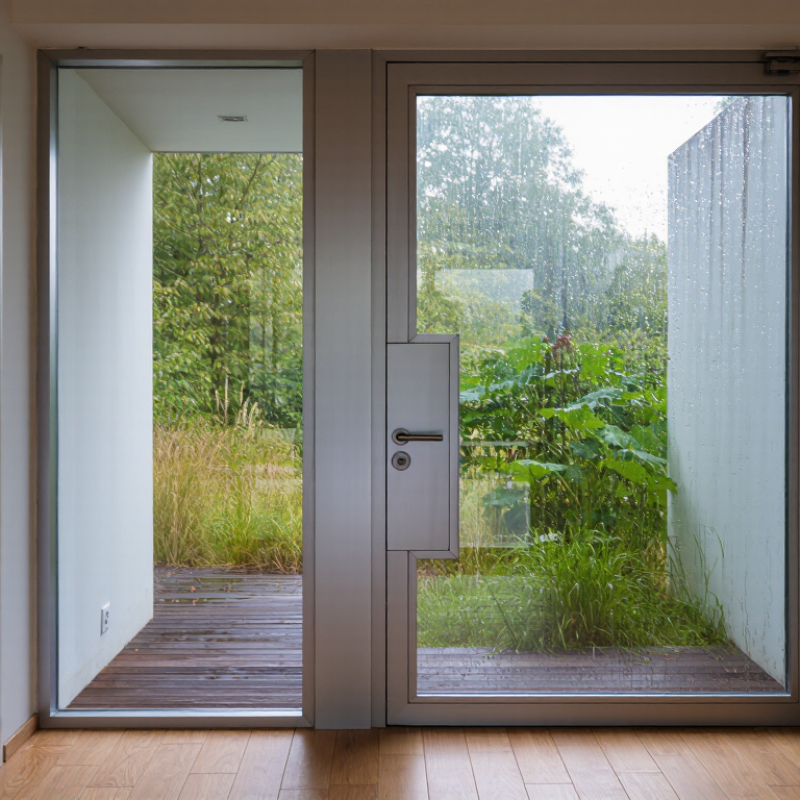
Why Choose an Aluminum Door With a Window?

What Defines an Aluminum Door With a Window?

Why Choose an Aluminum Door With a Window?

What Defines an Aluminum Door With a Window?

An aluminum door with a window combines a metal frame and door leaf with one or more glazed openings. The glass may sit in a compact eye-level lite or occupy a larger section of the panel. Aluminum allows slim frame profiles, so more daylight can enter without making the door look bulky. Look closely at the frame: a thermal break separates its inner and outer sections, reducing direct heat transfer. The glass unit, seals, hinges, and installation also affect comfort and performance. The label alone tells only part of the story.

For a useful comparison, check the National Fenestration Rating Council’s certified ratings. U-factor measures heat transfer; solar heat gain coefficient indicates how much solar heat passes through glazing. The U.S. Department of Energy reports that windows account for about 25–30% of residential heating and cooling energy use. That figure concerns windows, not doors specifically, but it shows why glazing deserves attention. A bright entry can still feel cold near the glass. Details matter.

Tips: Match the glazing to your climate and the door’s exposure. Ask for rated product data, then inspect the seals and frame corners. A large pane looks inviting, but privacy and glare may become daily annoyances. I would not choose by appearance alone.

Why Choose an Aluminum Door With a Window?

What Defines an Aluminum Door With a Window?

An aluminum door with a window combines a durable metal frame with glazed panels that admit daylight. The chart compares typical visible light transmittance (VLT) ranges for common glazing options; actual values vary by glass composition, coatings, thickness, and manufacturer.

How Glazing and Frame Design Affect Performance

An aluminum door with a window performs best when its glass and frame are designed as one system. The U.S. Department of Energy’s Energy Saver guidance estimates that heat gain and loss through windows account for 25–30% of residential heating and cooling energy use. A door’s glazed area can therefore affect comfort, especially beside a sunny patio or a cold entryway. Double glazing creates an insulating air space; a low-emissivity coating can reduce unwanted heat transfer while still admitting daylight. Small details matter. The right choice depends on climate, orientation, and how much sun reaches the glass.

Aluminum conducts heat readily, so a thermally broken frame uses a less-conductive barrier between its inner and outer sections. That can limit heat flow through the frame, though it cannot fix poor installation. Check the National Fenestration Rating Council label for whole-product U-factor and solar heat gain coefficient ratings, not just the glass specification. Lower U-factor generally means better insulation; SHGC indicates how much solar heat enters. Numbers need context. A highly rated pane can still feel drafty if the perimeter seal is uneven or the sill drains poorly. I would inspect those joints closely, because the neatest frame is not always the tightest one.

Benefits for Natural Light, Durability, and Style

An aluminum door with a window can bring daylight into an entryway that feels dim, especially when the door faces a shaded porch or narrow hall. Clear glass admits more light, while frosted or textured glass softens views from outside. The effect depends on placement: a small pane may brighten the area near the door but leave the rest of the room unchanged. Light shifts through the day. Check how the opening faces before choosing glass, and consider privacy after dark, when indoor lights can make a window more revealing.

Aluminum offers a slim, sturdy frame that can support broad glass panels without a bulky appearance. Its protective finish generally resists rust, though scratches and neglected surfaces still deserve attention. For comfort, look for a thermally broken frame and suitable insulated glazing; performance varies by product and climate. That detail is easy to overlook. A dark frame can create a crisp contrast with pale walls, while a lighter finish blends in more quietly. Before deciding, compare the frame color, glass pattern, and visible hardware with nearby floors and trim. The combination may look different in daylight than it does in a showroom, so a sample near the actual doorway can help.

Common Glass Options and Security Features

An aluminum door with a window can bring daylight into an entryway, but the glass choice matters. Clear glass keeps sightlines open. Frosted or patterned glass softens views while still letting light through. For impact resistance, tempered glass is heat-treated and designed to break into smaller pieces. Laminated glass uses a bonded interlayer that can help hold fragments together after breakage. Neither option makes a door unbreakable. Details matter.

Insulated glass units can reduce heat transfer and condensation, depending on their construction and the surrounding frame. They are mainly a comfort choice, not a stand-alone security upgrade. For added protection, consider laminated glazing alongside a sturdy frame, secure hinges, and a well-fitted lock. The glass, frame, hardware, and installation work as one system; a strong pane in a poorly fitted door may offer less reassurance than expected. Ask for the glass specification and any tested performance ratings, then match them to the door’s location and exposure. A busy, street-facing entry may call for different privacy and security choices than a sheltered back door. It is easy to focus on appearance and miss the small hardware details. That deserves a second look.

How to Choose a Door for Your Space and Climate

Choosing an aluminum door with a window starts with climate, not appearance. In cold regions, prioritize a low U-factor, insulated glazing, and a thermally broken frame to reduce heat transfer. In hot, sunny locations, compare solar heat gain coefficient (SHGC), and consider low-emissivity glass or exterior shading. The U.S. Department of Energy’s Energy Saver guidance estimates that windows account for 25–30% of residential heating and cooling energy use. That figure applies to windows, not doors, but it shows why glazed areas deserve careful specification. Small details matter.

Use National Fenestration Rating Council (NFRC) ratings to compare whole-product U-factor and SHGC, rather than judging glass alone. Check that the selected door’s size and configuration match its rated performance. In coastal or rainy climates, look for corrosion-resistant hardware, durable finishes, proper flashing, and sill drainage; wind-driven rain can find a tiny gap. Exposure matters, too: a shaded entry differs from a west-facing door in afternoon sun. Insulated cores and tight weatherstripping help, but installation quality can undo them. A thermal break alone will not prevent every condensation problem; indoor humidity and cold surfaces still matter. I would check both.

FAQS

How can glazing affect a room’s comfort?

Double glazing creates an insulating air space. A low-emissivity coating can reduce heat transfer while admitting daylight. Climate and sun exposure matter.

What do U-factor and SHGC ratings tell me?

U-factor measures heat flow; lower values generally mean better insulation. SHGC shows how much solar heat enters. Numbers need context.

Does a thermally broken aluminum frame prevent drafts?

It can limit heat flow through the frame. It cannot fix uneven seals or poor installation. I’d inspect the joints and sill, too.

Which glass offers more privacy?

Frosted or patterned glass softens views while letting light through. Clear glass keeps sightlines open. At night, indoor lighting can reveal more than expected.

What is the difference between tempered and laminated glass?

Tempered glass is designed to break into smaller pieces. Laminated glass has a bonded layer that can help hold fragments together. Neither is unbreakable.

Does insulated glass make a door more secure?

It mainly supports comfort and may reduce condensation. Security also depends on the frame, hinges, lock, and installation. A strong pane alone may not reassure much.

How can I choose a glass option for my doorway?

Consider sunlight, privacy, and exposure. A street-facing entrance may need different choices than a sheltered back door. Small details matter.

How do I know whether a frame finish will suit my home?

Compare its color and hardware with nearby floors and trim. A sample beside the actual doorway can help. Showroom lighting can mislead.

Conclusion

An Aluminum Door With Window combines the strength of an aluminum frame with the openness of glazed panels, offering a practical way to connect indoor and outdoor spaces. Its performance depends on both the glazing and the frame design: glass type, panel thickness, seals, and thermal breaks can influence insulation, noise reduction, weather resistance, and ease of use. Aluminum is valued for its durability and clean appearance, while glazing can bring more daylight into an entryway and make a room feel brighter and more spacious.

Glass options range from clear to frosted or tinted, allowing homeowners to balance visibility, privacy, and light. Security features such as reinforced glass, sturdy locking systems, and well-fitted frames can add reassurance. When choosing a door, consider the space, desired style, privacy needs, local climate, and exposure to heat, cold, wind, or rain. The right combination of frame and glass can provide lasting function while complementing the home.

Aria

Aria

Aria is a dedicated marketing professional with a deep passion for innovative strategies and a keen understanding of our company's product offerings. With a wealth of experience in the industry, Aria excels at crafting engaging content that highlights the unique features and benefits of our......