Choosing Aluminium Sliding Doors is not simply a matter of selecting the widest glass panels. The right system must suit your opening, climate, building structure, and daily habits. A coastal home may need stronger corrosion protection. A busy family entrance needs durable rollers and simple maintenance. Small details matter.
Fenestration consultant Mark Haley says, “A sliding door performs only as well as its frame, hardware, glass, and installation work together.” That principle should guide every comparison. Examine the aluminium grade, thermal break design, glazing specification, drainage channels, locking points, and track quality. Ask for documented performance data, including thermal insulation, air permeability, water resistance, and wind-load testing. Do not trust impressive photographs alone.
Measure carefully. A large opening may require structural reinforcement before installation. Check whether the threshold sits flush, raised, or recessed. Each option affects accessibility, drainage, and cleaning. Visit a showroom if possible. Move the door yourself. Listen for grinding, test the handle, and inspect the meeting stiles closely.
Premium products are not automatically suitable. Sometimes, a simpler configuration works better. I would also question vague guarantees and unclear installation responsibilities. A beautiful door can still leak, stick, or lose performance when fitted poorly. Review the installer’s experience with Aluminium Sliding Doors, request recent project references, and confirm after-sales support. The best choice balances appearance, measured performance, dependable workmanship, and realistic maintenance expectations.
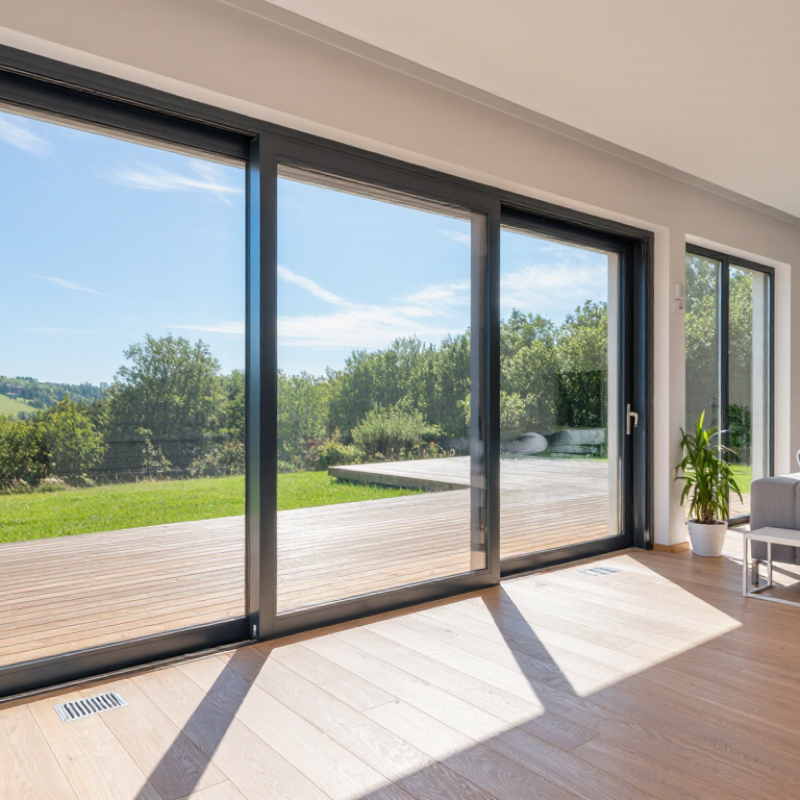
How to Choose the Best Aluminium Sliding Doors?
Define the opening before comparing finishes or glass. Measure width and height at three points, then use the smallest readings. Check diagonals too. A 6 mm mismatch can make a large sliding panel drag. Leave the manufacturer’s specified tolerance around the frame, not an improvised gap. The U.S. Department of Energy reports that windows and doors can contribute 25–30% of residential heating and cooling energy use, so poor installation can undermine good glazing.
Panel weight needs careful calculation. Standard 6 mm glass weighs about 15 kg per square metre; thicker, laminated, or insulated glass adds substantially more. Include the aluminium frame, rollers, handles, and safety hardware. A 2.4 m by 1.2 m panel with insulated glass may exceed 150 kg. Choose rollers rated above the calculated load, following AAMA/WDMA/CSA 101/I.S.2/A440 performance requirements. Bigger is not always better.
Traffic changes the specification. A quiet terrace may suit a lighter system, while a café entrance needs durable rollers, replaceable hardware, and controlled closing. ASTM F842 provides test methods for sliding glass door assemblies, including operating force and durability. Ask how many cycles the system is tested for. Numbers can look impressive. Real floors are rarely perfect. Recheck drainage, threshold height, and accessibility before ordering; one overlooked detail can spoil an otherwise precise design.
Choosing an aluminium sliding door starts with its thermal performance, not its finish. Aluminium alloys conduct heat efficiently, with 6063 profiles commonly reported near 200 W/m·K in engineering data. That strength supports slim frames, but it also creates a thermal bridge. A polyamide thermal break separates the inner and outer aluminium sections, reducing heat transfer through the frame.
Look for a tested whole-door U-value below 1.6 W/m²K. EN ISO 10077-1:2017 explains how frame, glazing, and junctions contribute to calculated thermal transmittance. The declared value should cover the complete door, not only the glass centre. This distinction matters. A door can advertise low glazing U-values while its frame remains comparatively weak.
The International Energy Agency reported that buildings and construction consumed about 30% of global energy in 2022. Better envelope design therefore has measurable value. Ask for test reports under EN 14351-1, including the door size and configuration tested. Larger sliding panels may perform differently because frame proportions change. Check the gasket layout, interlock detail, and installation gap beside the headline number. On site, poor perimeter sealing can undermine a well-designed thermal break. I would also question unusually low claims without climate, glass, and spacer details. The number may be accurate, but incomplete.
How to Choose the Best Aluminium Sliding Doors?
Glazing often determines a sliding door’s real performance. U-value measures heat transfer through the glass and frame. Lower numbers usually mean better insulation. The U.S. Department of Energy reports that windows can cause 25–30% of residential heating and cooling energy use. That figure makes glass selection more important than frame appearance.
Check the National Fenestration Rating Council label. It lists U-factor, SHGC, and visible light transmittance (VT). SHGC ranges from zero to one. A lower SHGC can reduce summer heat, while a higher value may support winter warmth. Climate matters. I would not choose the lowest U-value blindly. A highly insulated door can still overheat a sunny room.
VT indicates how much daylight passes through the glazing. Higher VT can reduce daytime lighting demand, according to guidance from the U.S. Department of Energy. However, very bright rooms may create glare near a south-facing opening. Measure the room’s orientation, shading, and nearby floor surfaces. Lawrence Berkeley National Laboratory’s WINDOW research tools can help compare glazing combinations. Ask for certified whole-product ratings, not glass-only figures. Small details matter. Spacer design, seals, and installation quality can weaken excellent laboratory results. I have seen attractive specifications fail when the door was poorly aligned. Some uncertainty remains. Local weather data and actual room use should influence the final choice.
Lower U-value indicates better thermal insulation. Higher SHGC allows more solar heat gain, while higher visible light transmittance provides a brighter interior. These representative glazing values are for comparison; the final door performance also depends on the frame, spacer, size, and test standard.
When choosing aluminium sliding doors, treat EN 12207 Class 4 Air as a measurable performance requirement, not a sales phrase. The EN 12207:2016 test table limits Class 4 leakage to 3 m³/(h·m²) at 100 Pa. At 600 Pa, the limit falls to 0.75 m³/(h·m²). This matters near busy roads, exposed balconies, and rooms with strong heating or cooling demand. Ask for the complete laboratory report, including door size, configuration, pressure stages, and test date. A small sample may perform better than a large sliding panel.
EN 12208 Class 9A Water performance is equally important. Under EN 12208, Class 9A is tested at 600 Pa, with no water penetration during the prescribed test period. That pressure represents severe wind-driven rain, but it does not guarantee perfect performance on every building. Installation quality, drainage channels, gaskets, track alignment, and threshold design still matter. I have seen excellent test results weakened by blocked weep holes and uneven substrates. That is an uncomfortable detail, but it deserves attention.
Professional guidance for curtain wall and window testing repeatedly stresses that laboratory results apply to the tested specimen. Therefore, check whether the report covers the actual panel width, opening direction, frame joint, and sill detail. Do not accept “Class 4 and 9A” without evidence. Request independent accreditation, installation instructions, and site inspection records. The label is useful. The surrounding details decide whether it remains useful.
Choosing aluminium sliding doors starts with security, not appearance. Check multi-point locks, strong rollers, anti-lift blocks, and laminated or toughened glass. Try the lock yourself. It should engage smoothly, without a loose handle. Narrow frames look elegant, but frame strength and glass specification matter more. Ask for tested resistance data, not vague claims. A secure door should also have drainage channels and tight seals. Small gaps can invite water and drafts.
Hardware life depends on weight, alignment, and daily use. Open the panel several times during inspection. It should glide quietly and stop without bouncing. Stainless steel or corrosion-resistant components suit humid and coastal areas. Still, “maintenance-free” is rarely absolute. Tracks collect grit. Rollers need occasional cleaning and adjustment. I have seen expensive doors fail early because installers forced a heavy panel onto an uneven track. That mistake is easy to miss at handover.
Installation quality deserves written attention. Confirm how the opening will be measured, supported, sealed, and checked for level. Ask for photographs behind finished trims when possible. A warranty is useful only when its limits are clear. Read coverage periods for frames, glass, locks, rollers, finishes, and labor separately. Check exclusions, response times, and who pays for removal or service visits. Keep invoices and inspection records. I would also ask what happens if the door becomes slightly misaligned after six months. Many warranties sound reassuring, yet that practical detail remains unclear.
Measure the width and height at three points. Use the smallest readings. Check the diagonals too. A 6 mm mismatch may make a panel drag. Keep the specified frame tolerance. Do not invent a gap.
Glass is heavy. Standard 6 mm glass weighs about 15 kg per square metre. Insulated or laminated glass weighs more. Add the frame, rollers, handles, and safety hardware. A 2.4 by 1.2 metre panel may exceed 150 kg.
Calculate the complete panel weight first. Choose rollers rated above that load. Larger doors are not automatically better. I would still check the actual load calculation. A beautiful panel can become difficult to operate.
A quiet terrace may need a lighter system. A busy entrance needs durable rollers and replaceable hardware. Controlled closing can reduce impacts. Ask how many opening cycles the system has completed in testing.
Request EN 12207 Class 4 air performance. At 100 Pa, leakage is limited to 3 m³/(h·m²). At 600 Pa, the limit is 0.75 m³/(h·m²). Ask for the complete laboratory report.
EN 12208 Class 9A tests resistance to severe wind-driven rain at 600 Pa. It does not guarantee perfect results in every building. Blocked drainage holes can still cause water problems. Small details matter.
Check the tested panel width and opening direction. Review the frame joint, sill detail, pressure stages, and test date. Confirm independent accreditation when available. A label alone is not enough.
Inspect drainage channels, gaskets, track alignment, and threshold height. Check accessibility before ordering. Uneven floors can affect movement and sealing. I might overlook one detail. That detail could spoil the whole design.
Choosing the best Aluminium Sliding Doors starts with matching the door system to your building’s practical needs. Accurately measure the opening size, consider the weight of each panel, and evaluate how frequently the doors will be used. Compare aluminium alloys and thermal-break designs, giving preference to systems capable of achieving U-values below 1.6 W/m²K for improved insulation. Glazing should also be assessed through its U-value, solar heat gain coefficient, and visible light transmittance to balance comfort, energy performance, and natural daylight.
Performance and durability are equally important. Look for independently tested air tightness meeting EN 12207 Class 4 and water resistance meeting EN 12208 Class 9A. Review the locking system, rollers, handles, and expected hardware life, while also checking the installer’s experience and quality-control process. Finally, examine the warranty carefully, including coverage for frames, glass, hardware, finishes, and installation. A well-chosen system should combine smooth operation, reliable weather protection, security, energy efficiency, and long-term serviceability.
Orion Window & Door