Choosing an Aluminium Sliding Window supplier is not just a price comparison. A window must move smoothly, seal reliably, and suit the building’s climate and daily use. Small details matter: track drainage, frame depth, roller quality, glass options, and replacement-part access. A showroom sample can look convincing. Real performance depends on the complete assembly.
Building-science expert Joseph Lstiburek is often credited with the blunt observation, “Windows are holes in walls.” It is a useful reminder, not a complete specification. A sliding unit can bring in daylight and open a room to a balcony, yet poor installation or weak weather seals may undermine those benefits. Details matter.
This guide introduces ten suppliers serving markets around the world. It is intended as a practical starting point, not a universal ranking. Product ranges, manufacturing capacity, certifications, service networks, and regional availability can differ. Ask for test reports that match the exact configuration, not just a similar-looking model. Check lead times, warranty terms, and who handles service after installation. Then compare like with like.
There is no perfect shortlist for every project. A supplier suited to a coastal home may not fit a high-rise specification or a tight renovation schedule. That part deserves a second look. The right choice balances verified performance with local support, clear documentation, and the needs of the people using the window every day.
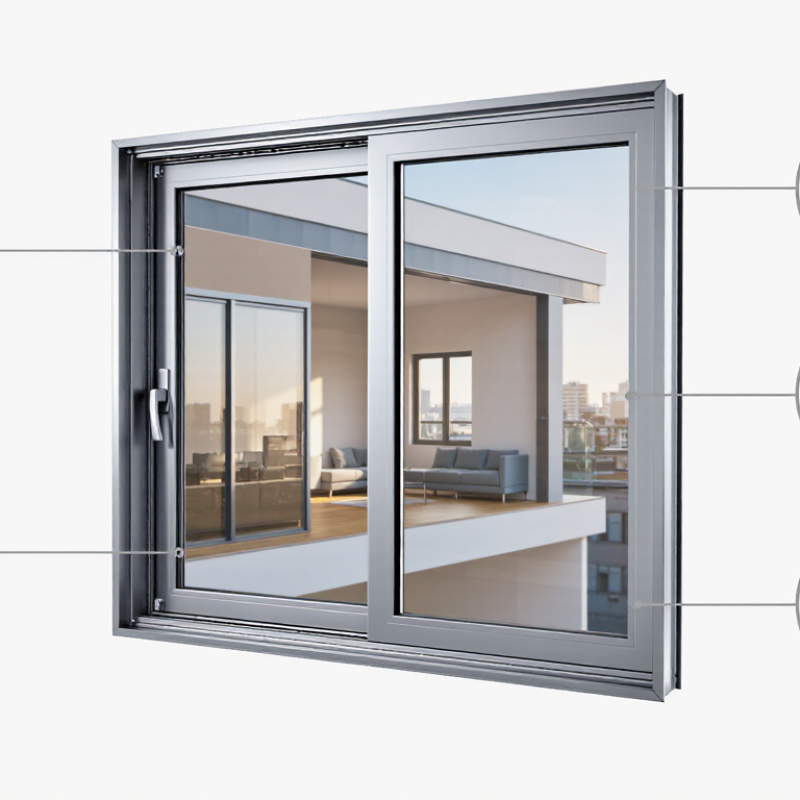
An aluminium sliding window supplier is a business that manufactures, fabricates, or distributes window frames, tracks, rollers, seals, and related components. The term covers more than factories. Some suppliers assemble complete units from purchased parts, while others provide profiles or hardware for local fabricators. That distinction matters. Buyers should confirm what the supplier actually makes and what it sources elsewhere.
The global market includes producers serving domestic construction, export projects, and specialist renovation work. Requirements vary with climate, building design, and installation practice. Coastal projects may need careful attention to corrosion resistance; colder regions often prioritize thermal breaks and effective seals. These are project considerations, not guarantees of performance. A product’s stated specifications should be checked against test records and the conditions where it will be installed.
Experienced suppliers can explain profile dimensions, glazing compatibility, drainage paths, and expected maintenance. Ask for drawings, material details, production tolerances, and clear warranty terms. Samples help, but a small sample cannot reveal every issue in a full installation. Delivery capacity and after-sales support also shape supplier suitability across borders. Comparisons are imperfect; different testing methods can make similar claims look more alike than they are. A careful review may still miss a detail.
A credible ranking of aluminium sliding window suppliers should look beyond catalogue size. Production capacity can be assessed through verified annual output, factory equipment, and quality checks on frame dimensions, seals, and roller movement. A large plant is not automatically a reliable one. Reported capacity may differ from actual output, so evidence matters.
Export reach deserves a separate score. Consider the number of markets served, regular shipment records, and the supplier’s ability to protect finished frames during long transport. Packaging details are telling: corner guards, separated glass, and moisture-resistant wrapping can reduce damage. Reach alone is not proof of service quality. Buyers should also check lead times and how replacement parts are handled.
Certifications complete the picture, but their scope must be read carefully. A valid quality-management certificate supports process consistency; it does not certify every window model. Product testing for air leakage, water resistance, wind pressure, and thermal performance offers more direct evidence. A practical scoring model might weight production at 40%, export reach at 35%, and relevant certifications at 25%. Those weights are useful, not perfect. Regional requirements differ, and public data can be incomplete. Ranking suppliers fairly therefore means checking current documents, test reports, and facility records rather than relying on polished claims.
Ranking the Top 10 by Production, Export Reach and Certifications
About this chart: It shows an editorial weighting model for comparing suppliers, not verified scores or a factual ranking of individual companies. Production capacity is weighted at 40%, export reach at 35%, and certifications at 25%. Supplier-specific results require comparable, independently verified data.
When comparing aluminium sliding window suppliers, request test reports, not just class labels. EN 12207 rates air permeability from Class 1 to Class 4. At 100 Pa, Class 4 permits no more than 3 m³/(h·m²) of air leakage, measured against window area. Small numbers matter. Poor sealing can mean draughts around the meeting stile, even when the frame looks precise. The European Commission reports that buildings account for about 40% of EU energy consumption, making airtightness a practical performance concern.
EN 12208 measures resistance to wind-driven rain. Its 1A–9A scale reaches 600 Pa at Class 9A; higher classes indicate testing at greater pressure, not a guarantee against every storm or installation error. Ask suppliers for the full test report, including specimen size, opening configuration, and test pressure. A laboratory result is useful. Site workmanship still matters: a misaligned sash, compressed gasket, or uneven sill can weaken performance. I would also compare air and water results together, since a very tight window can still leak at its drainage path. Check the details carefully.
When comparing aluminium sliding window suppliers worldwide, treat EN 12210 wind-resistance classes as a starting point, not a complete promise of performance. Classes 1–5 describe resistance under defined test conditions, including pressure and frame deflection. Ask for the tested configuration: opening size, sash arrangement, hardware, and glazing can all affect the result. A class shown on a brochure may not cover every size in a project. Small detail, big difference.
For thermal performance, request values calculated using ISO 10077, and check whether the figure refers to the whole window or only its frame. The whole-window U-value reflects the frame, glass, and their junction; a low frame value alone does not tell the full story. Compare like with like, including glazing specification and window dimensions. Ask how thermal breaks and sliding seals are designed, since narrow meeting rails and worn seals can undermine comfort. Look closer.
Good documentation should identify the test or calculation method, product configuration, and applicable dimensions. Real-world results also depend on installation, drainage, and adjustment after fitting. Even a well-tested unit can disappoint if the frame is poorly shimmed or the perimeter seal is uneven. I would not treat a single headline rating as decisive; suppliers should be able to explain its limits clearly.
Supplier-specific rankings and product ratings are not presented because they require verifiable, model-specific test documentation. The table below provides ten factual comparison criteria for evaluating suppliers without naming companies or brands.
| No. | Comparison Dimension | Standard or Factual Data | Evidence to Request from the Supplier |
|---|---|---|---|
| 1 | Wind-resistance class | EN 12210 assigns wind-load resistance classes. The reference test pressure for Classes 1–5 is 400, 800, 1,200, 1,600, and 2,000 Pa, respectively. Higher declared classes indicate testing at higher reference pressures. | A test report or classification document for the exact sliding-window configuration, including its dimensions, opening type, and declared class. |
| 2 | Thermal transmittance (Uw) | ISO 10077 provides calculation methods for the thermal transmittance of windows and doors. Uw is product-specific and depends on the frame, glazing, edge effects, and window size; the standard does not assign one universal value to aluminium sliding windows. | A calculation report stating the Uw value, calculation method, product dimensions, glazing specification, and relevant component inputs. |
| 3 | Air permeability | EN 12207 classifies the air permeability of windows and doors. The class must be established by testing; it cannot be inferred from frame material or product appearance. | An EN 12207 classification or test report for the offered model and tested configuration. |
| 4 | Watertightness | EN 12208 classifies resistance to watertightness under test conditions. The declared result applies to the tested product configuration and should be checked against project exposure requirements. | The EN 12208 classification and the corresponding test report, including the specimen configuration. |
| 5 | Glazing specification | Glass build-up affects thermal and other window performance. Glazing thickness, pane arrangement, gas fill, and coatings should be stated rather than assumed from a general product description. | A glazing schedule identifying the glass build-up and the performance values used in the window’s declared or calculated results. |
| 6 | Frame and thermal-break details | Aluminium frame geometry and thermal-break design contribute to frame thermal transmittance (Uf). The resulting value is specific to the system and calculation or test method used. | System cross-sections and the documented Uf input or result used in the whole-window thermal assessment. |
| 7 | Acoustic performance | Sound insulation is product-specific and depends on the complete assembly, including glazing, seals, frame, and installation. A generic profile description does not establish an acoustic rating. | A test report for the specified window configuration, with the reported acoustic rating and test method identified. |
| 8 | Operating hardware | Rollers, tracks, locks, and handles affect operation and maintenance. Their suitability depends on sash dimensions, mass, usage, and the intended service conditions. | Hardware specifications, declared sash weight limits, maintenance guidance, and any applicable durability test documentation. |
| 9 | Materials and finish | Alloy, temper, coating system, and surface preparation should be specified for the actual product. Corrosion resistance and finish performance depend on the material and coating system as well as the exposure environment. | Material and finish specifications, coating documentation, and any relevant test results or conformity documents. |
| 10 | Configuration and installation scope | Performance classifications apply to tested or assessed configurations. Changes in size, glazing, frame options, hardware, or installation details may affect the result. | A project-specific configuration schedule, installation instructions, and confirmation of the scope covered by each performance document. |
Product range
Aluminium sliding window suppliers differ in more than frame finishes. A useful comparison starts with product range: frame depth, glazing options, thermal breaks, track design, and available opening sizes. Ask whether the supplier offers insect screens, child-safety features, and replacement rollers. Small details matter. A narrow track may suit a balcony, while a larger glazed panel can demand stronger hardware and careful installation.
Market considerations
Markets shape product choices. Coastal projects may need durable finishes and corrosion-aware hardware; colder regions often prioritize insulated frames and low air leakage. These are not automatic guarantees. Request technical data for the exact configuration, including glass, seals, and frame size. A test result for one model may not represent every variation.
Standards & verification
Verified standards make comparisons more meaningful. For European markets, relevant documentation may reference EN 14351-1, with performance testing under standards such as EN 1026, EN 1027, and EN 12211. North American projects may use ASTM E283 for air leakage, E331 for water penetration, or E330 for structural performance. Confirm the applicable market, test scope, laboratory, and report date. A certificate alone can be vague; the underlying report deserves a closer look. Even careful buyers can miss that distinction.
A supplier may manufacture complete windows, assemble purchased parts, or provide profiles and hardware. Ask what it makes in-house.
Request profile dimensions, glazing compatibility, drainage details, production tolerances, and warranty terms. Drawings make comparisons easier.
Coastal sites may need corrosion-resistant materials. Colder regions often need thermal breaks and effective seals. Check specifications for your site.
Review factory equipment, verified output, and quality checks for frame dimensions, seals, and roller movement. A large plant proves little by itself.
Check shipment records, lead times, and replacement-part arrangements. Look for corner guards and moisture-resistant wrapping. Packaging matters.
No. A quality-management certificate supports process consistency, but does not certify each model. Check product-specific test reports.
Ask for results covering air leakage, water resistance, wind pressure, and thermal performance. Confirm that the tests fit your project conditions.
Not entirely. Rankings may weigh production, export reach, and certifications, but public data can be incomplete. I may still miss a detail.
A sample helps assess materials and movement. It cannot reveal every issue in a full installation. Small samples help.
This article examines the global market for Aluminium Sliding Window suppliers and explains how manufacturers can be compared across regions. It outlines the scope of the supplier category, from product design and production capacity to export reach and relevant certifications. The top ten suppliers are assessed using consistent criteria, helping readers understand the differences in product portfolios, target markets, and documented performance testing without relying on brand promotion.
The guide also introduces key standards used to evaluate window performance. These include EN 12207 air-permeability classes 1–4, EN 12208 water-tightness classes 1A–9A, and EN 12210 wind-resistance classes 1–5, alongside ISO 10077 thermal-performance considerations. By explaining what these classifications indicate, the article offers a practical framework for comparing suppliers and identifying products suited to different building requirements and climates.

Orion Window & Door